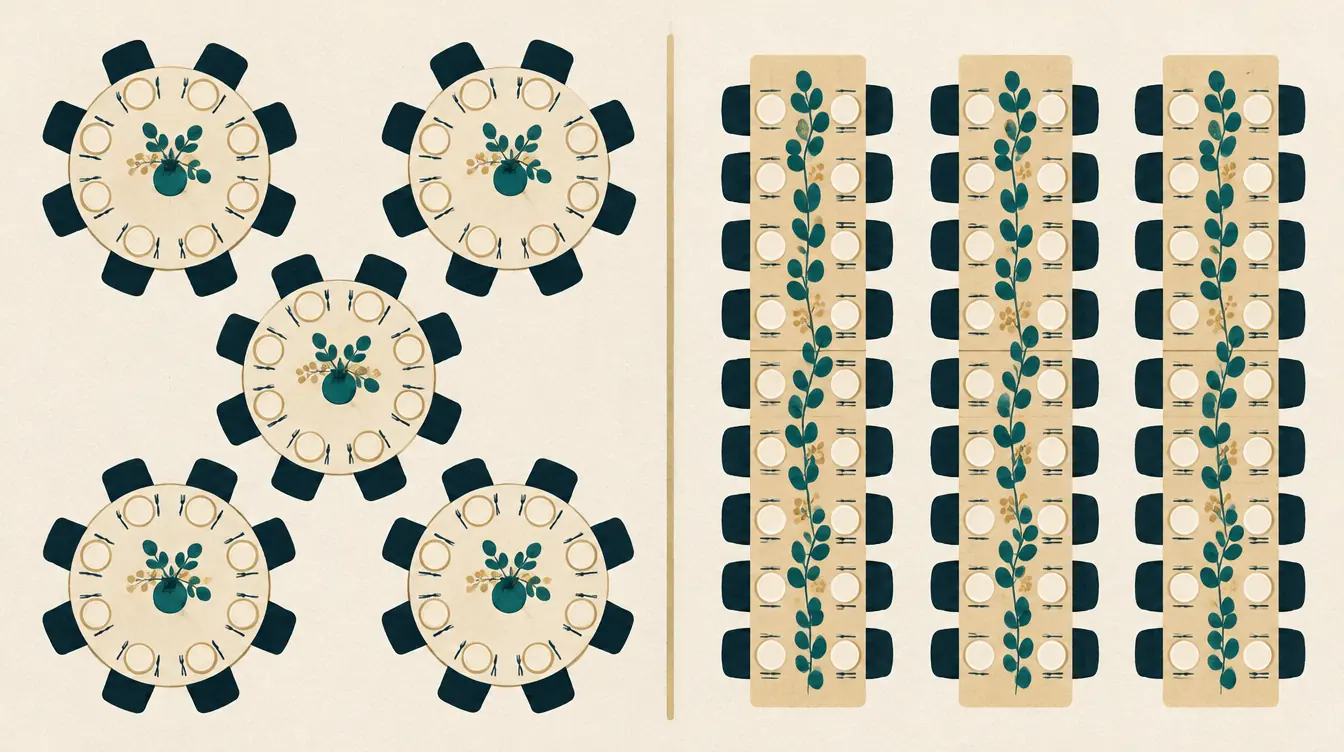
Round vs Rectangular Tables: Planning Wedding and Banquet Layouts
Round or rectangular? It’s one of the first questions a venue asks, and it shapes everything that follows: how many guests fit, who talks to whom, what guests can see, and how hard the seating plan is to make. This guide compares the two and shows how each works in the free wedding seating chart maker and event seating chart maker.
The short answer
Choose round tables for conversation within each table, easy grouping by household, and a classic banquet look. Choose long rectangular tables for a family-style feel, fitting more guests in a narrow room, and flexible group sizes. Your venue's room shape and table stock often decide for you.
Side by side
| Round tables | Long rectangular tables | |
|---|---|---|
| Conversation | Everyone at the table can join in | Mostly with the people beside and opposite you |
| Group sizes | Fixed per table (often 8–10) | Flexible — groups can run along a table |
| Seating plan difficulty | Easier: one table, one group | Harder: where one group ends and the next begins matters |
| Fit in a narrow room | Less efficient | More efficient |
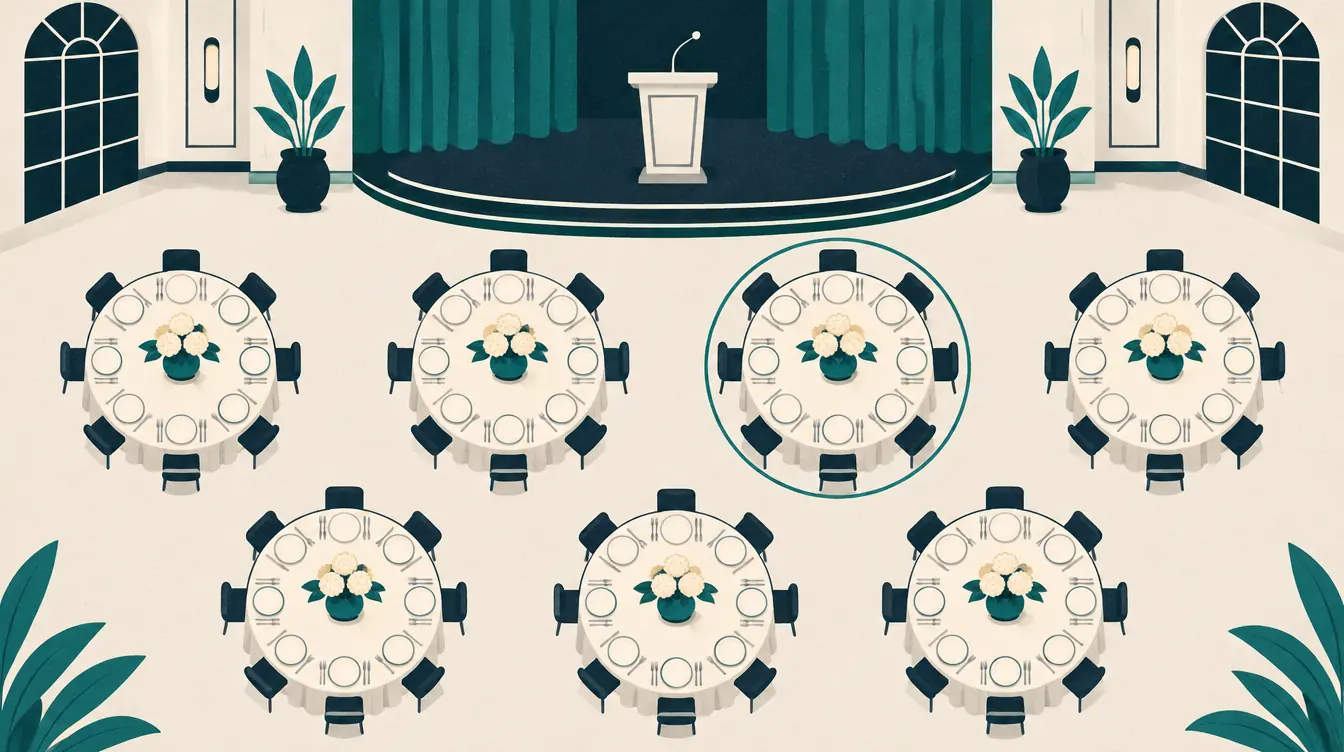
| Sightlines to a stage | Some guests face away | Depends on orientation; side-on is common |
| Look | Classic banquet | Family-style, rustic or formal “king’s table” |
| Head table | Usually a separate rectangular table | Can be one end of a long table |
Round tables in a seating chart
Round tables make the seating plan simple because each table is a natural group. In the tool:
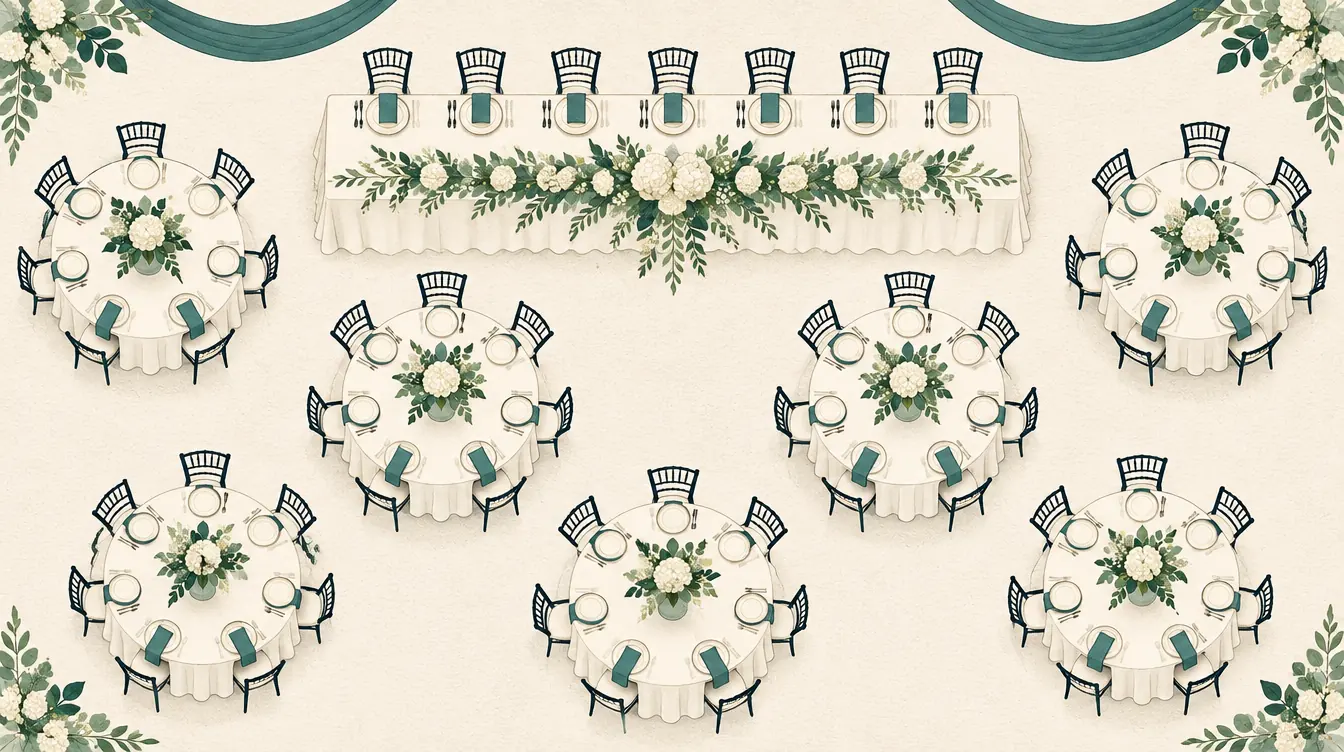
- Start from the round-table wedding template: a head table and eight rounds of eight.
- Change a table’s seats from 2 to 40; the table grows so that seats don’t overlap.
- Sit together and keep apart default to table level, which fits round tables perfectly.
- Households fit when the household is no larger than a table. The tool checks this before arranging and tells you which household doesn’t fit.
Neighbors still matter at a round table. If two guests should sit next to each other (a couple, a parent and child), add a sit together · adjacent seats rule; at a round table of eight, neighboring seats are adjacent and seats across the table are not.
Long tables in a seating chart
Long tables give more freedom and more to think about. In the tool:
- Start from the rectangular-table wedding template: four tables of sixteen, with a seat at each end, beside a dance-floor marker.
- Turn Seats at both ends on or off in the table’s details.
- Seats run along both long sides; seats directly opposite each other count as adjacent with the default distance, which suits couples who want to sit facing each other.
For a long table, “same table” can mean a very long stretch. If a household should sit close together, use sit together · adjacent seats for that household instead of a table-level rule — but keep the group small, because it needs a connected cluster of seats.
Capacity planning
- Count real seats, not table capacity labels. Some venues quote “tables of 10” that are comfortable at 8. Set the seats you’ll actually use.
- Leave space for movement. The plan shows relative positions, not measured aisles. Ask the venue for a floor plan with distances.
- Mix shapes when it helps. A long head table with round guest tables is common; just add both kinds of objects.
- Keep a spare seat or two at several tables for last-minute changes.
Making the choice
Ask:
- What does the venue have? Renting a different shape adds cost.
- What shape is the room? Long, narrow rooms suit long tables.
- How mixed are your groups? Many small households fit round tables well; a few large families may suit long tables.
- What will guests watch? Speeches and a first dance need sightlines; place tables accordingly.
- How much time do you have for the seating plan? Round tables are quicker to plan.
Planning both, then deciding
You can sketch both options before committing:
- Make the plan with round tables and seat everyone.
- Duplicate the chart on My charts.
- In the copy, replace the tables with long tables (the tool asks first and keeps a version) and seat everyone again.
- Compare how many households are split and how many preferences are unmet in each.
Related
- How to Organize Wedding Tables and Guest Lists
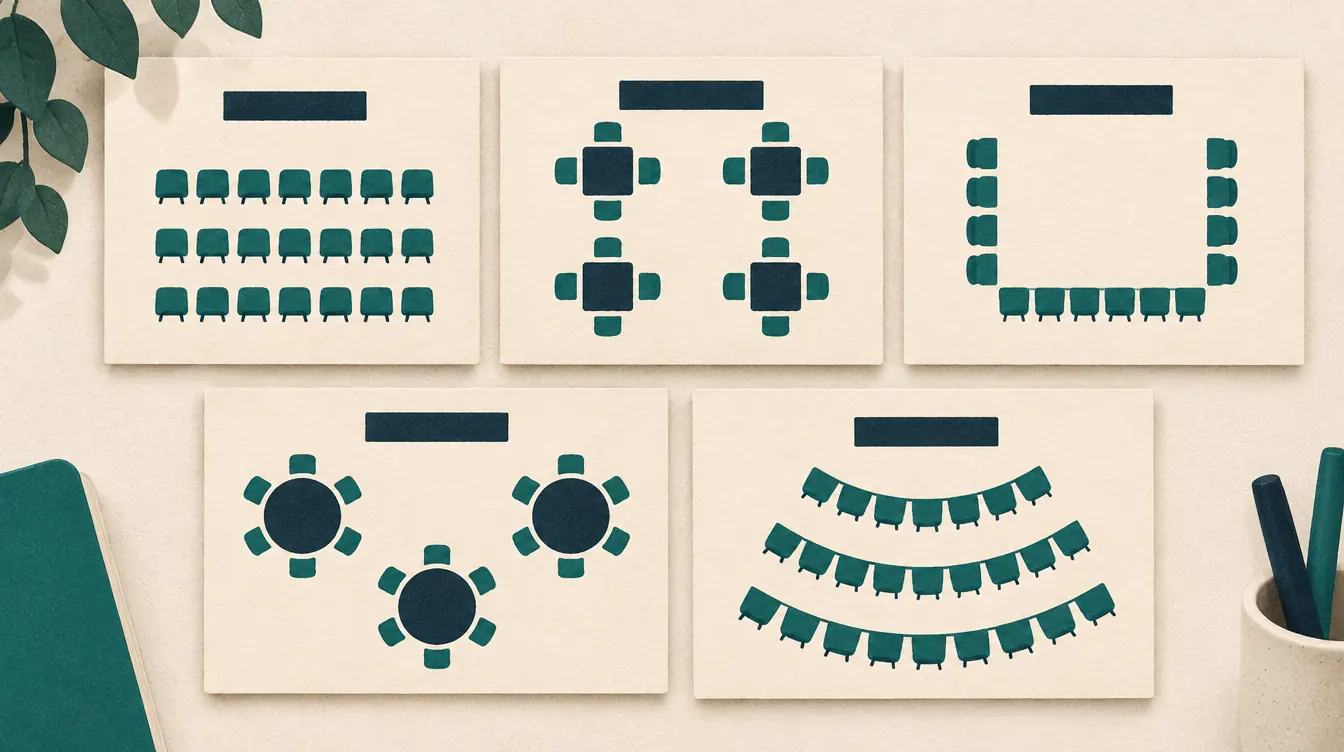
- How to Plan Event Seating for Banquets, Meetings and Talks
Put this guide into practice — it’s free and takes a few minutes.
Open the templateNew here? Read the complete guide to the free seating chart maker or the Wedding seating chart maker page .